Tesla self-driving accidents can leave drivers with more questions than answers. If Autopilot or Full Self-Driving (FSD) was active at the time of the crash, determining what caused the collision and who’s responsible is often more complicated than it would be after a typical car accident.
At Blackwell Law Firm, we help Alabama accident victims navigate complex liability cases involving vehicle technology and manufacturer responsibility. We know the courtrooms, and we know these cases often raise questions without simple answers.
That’s why we created this guide: to help you better understand how Tesla’s driver assistance features fit into an accident investigation and why those details matter.
Contact Now to Get Your Free Consultation Now
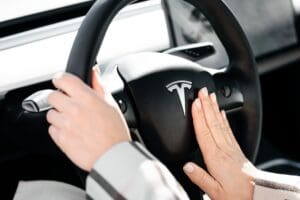
What Are Tesla Self-Driving Accidents?
Teslas are not fully self-driving vehicles. Most crashes involving these features happen while driver assistance technology is active, but the person behind the wheel is still responsible for monitoring the vehicle. That distinction is important because it often shapes how fault is evaluated after a Tesla accident.
Autopilot vs. Full Self-Driving — What’s the Difference?
Tesla’s standard Autopilot helps with everyday highway driving by maintaining speed and keeping the vehicle centered in its lane. Full Self-Driving mode expands on those capabilities with additional assisted driving features. Both systems are classified as SAE Level 2 technology, meaning drivers must remain attentive and take control when necessary.
Alabama law recognizes higher levels of automated driving technology. However, those provisions apply to vehicles capable of performing driving tasks without human intervention—not the Level 2 systems found in most Teslas today.
What Types of Crashes Involve Tesla Autopilot?
Certain crash types occur more often than others in vehicles equipped with Tesla’s driver assistance features, including:
- Rear-end collisions
- Phantom braking events
- Lane-departure crashes
- Collisions with stopped emergency vehicles
In December 2023, Tesla recalled more than 2 million vehicles after regulators determined additional safeguards were needed to encourage driver engagement while Autopilot was in use. While similar incidents have been reported across the country, they reinforce an important point: Autopilot is designed to assist the driver, not replace them.
How Tesla Autopilot Works — and Where It Fails
Tesla’s Autopilot can be a helpful driving tool, but it has limitations. According to NHTSA’s automated vehicle safety guidance, autopilot features are designed to assist the driver, who must remain engaged behind the wheel. When that partnership breaks down, the results can be serious.
Known Failure Modes Behind Tesla Autopilot Crashes
Driver assistance systems don’t perform perfectly in every situation. Worn lane markings and unexpected obstacles can make it harder for the vehicle to respond as expected. That’s why drivers are still expected to stay engaged when Autopilot is active.
The Role of Driver Attention in Tesla Crashes
One of the biggest misconceptions is that Autopilot can safely handle every situation on its own. It can’t. Drivers are still expected to supervise the vehicle, which can make fault determination even more complicated after Tesla Autopilot accidents. A driver who wasn’t paying attention may share responsibility, but investigators may also examine whether the technology itself contributed to the collision.
Understanding how the system performed, what the driver was doing, and what evidence is available all play important roles in evaluating a claim.

Does Tesla Record Accidents? How That Data Affects Your Claim
One of the biggest differences between Tesla self-drive accidents and typical car accidents is the amount of information each vehicle captures. Depending on the model and settings, Tesla vehicles can record data that substantiates what happened in the moments leading up to a collision.
What Data Does Tesla Automatically Record?
Tesla vehicles may capture several types of data before and during a crash, including:
- Vehicle speed and braking activity
- Steering inputs
- Accelerator position
- Airbag deployment information
- Camera footage, if the dashcam was enabled
Not every vehicle records the same information, and some features depend on the model and vehicle settings. When available, this data can provide valuable context that isn’t always available after traditional car accidents.
Does Tesla Record Accidents While Parked? (Sentry Mode)
Yes, if Sentry Mode is enabled, Tesla vehicles can record video when they detect motion or an impact while parked. Depending on the vehicle’s settings, this footage helps document incidents such as hit-and-runs, vandalism, or collisions that occur while the vehicle is unattended.
Note: Sentry Mode must be enabled, and some functions require additional storage or connectivity settings.
How to Preserve Tesla Data for a Legal Claim
Tesla data doesn’t remain available forever. Vehicle logs may be overwritten, and important evidence can become difficult to recover over time. Acting quickly after Tesla self-driving accidents helps preserve critical information to support accident claims.
If you’ve been injured in a Tesla self-driving accident, Blackwell Law Firm can help protect critical evidence, explain your legal options, and guide you through the next steps. Contact us today to schedule a free consultation.
Call Huntsville Car Accident Lawyer Now – (256) 261-1315
FAQ Section
Is Tesla responsible for accidents caused by Autopilot?
Not always. Drivers are still responsible for supervising Autopilot, but there are situations in which malfunctioning technology may have contributed to the accident. Liability depends on the specific facts of the crash.
Can I sue Tesla for an Autopilot accident in Alabama?
Possibly. If a vehicle defect or another issue with Tesla’s technology contributed to the crash, you may have a product liability claim under Alabama law. Whether that applies depends on the specific facts of the collision.
What should I do immediately after a Tesla self-driving accident?
Call 911, seek medical attention, and document the scene if you’re able. If your Tesla recorded vehicle data or Dashcam footage, avoid making changes that could alter or erase this information until you’ve spoken with an attorney.
Does Tesla Autopilot data get used in court?
It can. Depending on the circumstances, vehicle data, camera footage, and other electronic records may become important evidence in your legal claim.
What is a Tesla Robotaxi, and have there been accidents?
Tesla’s Robotaxi is a limited autonomous ride-hailing service, distinct from the Autopilot and Full Self-Driving features found in most consumer vehicles. As technology advances, accidents involving fully autonomous vehicles may raise different legal questions than those posed by today’s Tesla self-driving accidents.
Disclaimer: This article is for informational purposes only and should not be considered legal advice.

 (256) 261-1315
