 There are a lot of things I love about rural North Alabama. I grew up here and spent my childhood on my family’s farm outside Decatur. I love our outdoors and exploring our rural roads.
Drive east from Huntsville into the rural areas of eastern Madison County and Jackson County. Drive west from Decatur into Lawrence County and then south through Bankhead National Forest. Drive the country roads all across the counties of northern Alabama and you see beautiful forests, landscapes, small communities, and farms. You see a very different side our our beautiful area from the growth and traffic closer to Huntsville. There are farms, woods, small communities, churches, family homes, and roads people have traveled their entire lives.
But those same roads can present some very serious dangers.
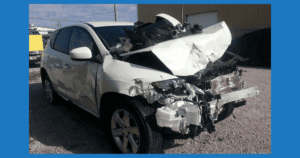
I was reminded of that recently while preparing a wrongful death case for trial. The wreck occurred at night on a dark, narrow rural road in Lawrence County. What happened? The other driver swerved suddenly to avoid something in the roadway, crossed into the opposing lane, and struck my clients. A good man died that night leaving a wife and kids.
The case was difficult – The road was unlit and very dark. I personally inspected the scene multiple times, both during the day and at night. Our experts examined the destroyed vehicles and downloaded their data boxes. Our experts measured and photographed the entire scene, reconstructing the events. We were able to show the at-fault driver was speeding down the dark road, over-driving his own headlights.
Thankfully, crashes like that are not everyday events. But when vehicles collide head-on on rural roads, the consequences can be catastrophic.
And the statistics show that rural-road crashes deserve far more attention than the amount of traffic on those roads might suggest.
Rural Alabama Roads Account for a Disproportionate Number of Traffic Deaths
According to the Alabama Department of Transportation’s 2024 Crash Facts, Alabama had 140,118 reported traffic crashes and 967 traffic fatalities in 2024. ALDOT classified 33,060 of those crashes as occurring in rural areas. Yet 565 of Alabama’s 967 traffic deaths occurred in rural areas.
Put another way:
About 24% of Alabama’s crashes occurred in rural areas, but approximately 58% of the state’s traffic deaths occurred there.
That difference is striking.
It also fits a broader national problem. The Federal Highway Administration has long identified roadway departures as one of the major dangers on rural highways. A roadway departure includes a vehicle leaving its lane by crossing an edge line or crossing the centerline into opposing traffic.
For drivers in North Alabama, that is especially relevant because so much of our region is connected by two-lane highways and county roads.
Why Are Head-On Collisions So Dangerous?
A head-on crash is fundamentally different from many other automobile collisions.
In a rear-end collision, for example, two vehicles may be traveling in roughly the same direction. In a head-on collision, the vehicles are moving toward one another.
That means drivers may have very little time to recognize the danger, react, brake, or escape.
There is often no median separating traffic. There may not even be a usable shoulder.
On a narrow two-lane road, a driver who suddenly sees another vehicle coming toward him may have only a few choices—and sometimes none of them are good.
The resulting crash can involve tremendous forces, especially when both vehicles are traveling at highway speeds toward each other.
These collisions can cause:
- traumatic brain injuries;
- spinal cord and cervical injuries;
- fractures of the legs, hips, pelvis, ribs, and arms;
- internal bleeding and organ injuries;
- chest injuries from seat belts and airbags;
- crushing injuries;
- permanent disability; and
- death.
Federal highway safety officials specifically treat head-on and other opposite-direction crashes as an important safety problem on two-lane rural roads. Federal research and safety programs have examined measures including centerline markings, edge lines, rumble strips, curve improvements, and other roadway treatments designed to reduce vehicles crossing into opposing lanes.
Rural Roads Present Dangers We Sometimes Take for Granted
People tend to associate dangerous driving with congested highways like I-565, I-65, Memorial Parkway, or Highway 72.
I get it. Those roads certainly have their risks. You certainly have lots of drivers on those roads who could make a bad choice and cause an accident.
But rural roads present a different set of hazards. Speed. Lane Size. Lighting.
Narrow Lanes and Little Room for Error
Many rural North Alabama roads were built decades ago. Some have narrow lanes, narrow shoulders, steep drop-offs, drainage ditches, trees close to the pavement, or combinations of those features.
That can become important when something unexpected happens.
A driver may encounter a deer, fallen tree limb, disabled vehicle, bicyclist, farm equipment, debris, or another obstruction.
The natural reaction may be to swerve.
But on a narrow two-lane roadway, swerving left can put the vehicle directly in front of an approaching car. Swerving right can put the vehicle down a steep drop-off. Over my years practicing law, I’ve seen horrible crashes from both. I mentioned earlier the head-on collision in rural Lawrence County that I worked for a grieving family. Last year, we helped a backseat passenger left paralyzed when a driver swerved the other way, went down an embankment, and struck a concrete culvert.
ALDOT’s 2024 data shows how often drivers encounter exactly these kinds of circumstances. The department recorded 6,032 crashes in which a “swerved to avoid vehicle/object” was identified as a primary contributing circumstance, including 27 fatal crashes. It also identified many crashes involving unseen objects, vehicles running off the road, and improper lane use.
Those numbers make the issue very real.
Darkness
Lighting is another major difference.
Outside Huntsville, Athens, Decatur, Florence and other populated areas, drivers often travel miles with virtually no street lighting.
Headlights illuminate only a limited portion of the roadway ahead. That’s assuming the lights are working and positioned properly.
Add curves, hills, trees, rain, fog, wildlife, or an unexpected object in the road, and reaction time can shrink quickly.
A road that seems completely familiar at noon can become a very different road at 10:00 at night. Yet, many drivers still drive at daylight speeds despite the low visibility. Too often, drivers over-run their own headlights and drive too fast.
Curves and Hills
North Alabama is not flat.
That is part of what makes this area beautiful, but elevation changes and curves can also reduce sight distance.
This is particularly noticeable on roads running through areas of Lawrence, Morgan, Jackson, Marshall, Franklin, Cullman, and Lauderdale Counties.
A driver entering a curve cannot always see what is happening several hundred feet ahead. The same is true when approaching the crest of a hill.
If another vehicle has drifted or crossed over the centerline, the innocent driver may not see it until the vehicles are dangerously close. What’s more, if a driver is going too fast for a curve, they can easily leave their travel lane.
Speed
Another problem is that rural roads often feel open. They invite our sense of freedom!
Traffic may be light. There may be few intersections. Drivers who know the road may become comfortable traveling it quickly.
But speed matters tremendously when something goes wrong.
Alabama’s 2024 crash data identified speeding as a contributing circumstance in 6,154 crashes and 142 fatal crashes statewide. Honestly, I think the issue is much larger. Drivers rarely admit to speeding and many accidents are not fully reconstructed. For big issues like speeding and distracted driving, I’ve always believed the actual numbers are much higher than reported due to these factors.
The faster a vehicle is traveling, the farther it travels while the driver recognizes a hazard and responds to it. Speed also reduces the time available for an oncoming driver to react.
Emergency Response
While this is not a factor in causing car accidents, it is a factor that can lead to deaths. If you are involved in a car accident in Huntsville or Madison, a hospital is near. If you are involved in a serious crash on a rural road, medical care may be far away. It takes time for paramedics to arrive. It takes time for paramedics to transport the accident victims back to a hospital for critical care. With our local air ambulance, that time is vastly reduced. But, it is still an issue. In a serious crash with bad injuries, every minute counts. I’ve had many rural crash cases over the years where the victim died during transport to a hospital.
The North Alabama Roads We Drive Every Day
There is no single “dangerous rural road” in North Alabama.
The issue exists across the region.
Drivers in Lawrence County travel roads connecting Moulton, Town Creek, Courtland, Hillsboro, Mount Hope and rural communities throughout the county. Nearby, drivers use Alabama Highway 24, Alabama Highway 157, Alabama Highway 101 and countless county roads.
Similar conditions exist beyond Lawrence County.
In Limestone County, rural roads stretch outward from Athens toward communities throughout western and northern Limestone County. I’ve driven most of these roads over the years.
Morgan County includes heavily traveled highways as well as miles of rural roads around Priceville, Eva, Somerville and the eastern and western portions of the county.
The same is true around Scottsboro and rural Jackson County; Albertville, Guntersville, and Marshall County; Russellville and Franklin County; Florence and Lauderdale County; and the communities surrounding Cullman.
The point is not that these roads are inherently unsafe. They are not.
It is that rural driving requires a different kind of awareness.
A road does not need heavy traffic to produce a devastating crash.
Sometimes all it takes is one vehicle crossing the centerline at exactly the wrong moment.
Head-On Crashes Often Require Serious Investigation
When we investigate a serious head-on collision, one of the first questions is obvious:
Why did the vehicle cross the centerline?
Sometimes the answer initially sounds simple.
“The driver swerved.”
“The car just came across the line.”
“There was something in the road.”
But serious cases require going further.
What did the driver see?
When did the driver see it?
How fast was the vehicle traveling?
Was the driver distracted?
Was the driver impaired or fatigued?
Could the driver have slowed or stopped instead of crossing into another lane?
Was there evidence on the pavement showing braking, steering, or the point of impact?
Did the vehicle’s electronic data recorder preserve information about speed, braking, throttle position, or other events immediately before the collision?
What do photographs, measurements, vehicle damage, physical evidence, witnesses, and law-enforcement records tell us?
In a catastrophic accident or wrongful death case, those details matter.
I have found that preparing a serious injury case correctly often means treating the investigation as though the case will ultimately be tried—even if most cases eventually resolve without a jury trial. Our approach is one of investigation and preparation.
Rural Does Not Mean Safe
Most of us probably feel a little more relaxed when we leave heavy Huntsville traffic behind and get onto a quiet country road.
I understand that feeling.
But Alabama’s crash statistics tell us something important.
In 2024, the majority of Alabama traffic deaths occurred on rural roads even though rural areas accounted for a much smaller percentage of the state’s total crashes.
That does not mean drivers should be afraid of rural roads.
It means we should respect them.
Slow down when visibility is limited. Expect the unexpected around curves and hills. Give yourself room to react. At night, remember that an object or vehicle outside the reach of your headlights may become a problem very quickly.
And above all, stay in your lane.
For another person traveling toward you on a dark North Alabama road, that centerline may be the only protection they have.

 (256) 261-1315
