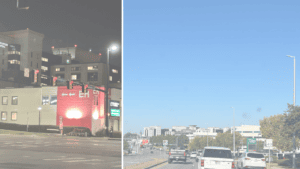
 If you have driven Governors Drive through Huntsville’s Medical District lately, you probably do not need a traffic study to tell you the area is busy.
I drive through this part of Huntsville almost every day. Some days, I drive through the area multiple times.
On a normal weekday morning, you may have employees headed to Huntsville Hospital, patients arriving for appointments, parents taking children to school, buses, delivery vehicles, pedestrians crossing between buildings and commuters simply trying to get from one side of Huntsville to the other.
Add school traffic to the morning commute, and everything gets tighter.
I have seen that traffic from more than one perspective. All my children traveled this route to high school. Every morning, I worried they would arrive safely, and on time, to Huntsville High. When I travel the length of Governors Drive in the morning headed to court in Decatur or Athens, I always plan extra time!
Over the years, I have also watched the morning congestion build as Huntsville has grown.
None of that growth is necessarily bad news. I’m not complaining. Much of the traffic is the result of something positive. Huntsville has grown. Huntsville Hospital has grown with it. The Medical District has become one of the most important employment and health care centers in North Alabama.
But our roads and traffic patterns have to keep up with that growth.
That is one reason the City of Huntsville is now taking a closer look at Governors Drive.
Huntsville Is Studying the Governors Drive Corridor
In 2026, the City of Huntsville launched the Governors Drive Corridor Study and Medical District Safety Action Plan.
The study covers approximately 8.85 miles of Governors Drive, from 14th Street on the west end to Caldwell Lane in the Big Cove area. It places particular emphasis on a one-square-mile area around the Huntsville Hospital campus.
The City has said the goals include improving safety and accessibility, preventing fatal and serious injuries and keeping traffic moving effectively for motorists, pedestrians, bicyclists, transit riders and others using the corridor.
That is a significant stretch of road.
It also illustrates something important about Governors Drive.
Governors Drive is not really one type of roadway.
Drive it from west to east and the character of the road changes repeatedly.
It passes through the Medical District. It moves east toward the base of Monte Sano. It climbs the mountain. Then it continues toward Hampton Cove, Big Cove and other fast-growing communities east of Huntsville.
Each section presents different traffic issues.
The Medical District May Be the Most Complicated Part
The Medical District presents a transportation challenge that is different from most other parts of Huntsville.
Huntsville Hospital is not simply one hospital building surrounded by a parking lot.
It is a large medical campus surrounded by physician offices, specialty facilities, parking garages, schools, churches, businesses and neighborhoods. Thousands of people have legitimate reasons to enter and leave this relatively compact area every day.
Many of those people are unfamiliar with it. Over the many years I’ve practice law, I’ve routinely taken medical depositions at physician offices around Huntsville Hospital, UAB, and Erlanger Hospital in Chattanooga. These large trauma and specialty centers see many patients and patient families largely unfamiliar with the surrounding area.
A person who drives to work at Huntsville Hospital every morning probably knows exactly which lane to use and where to turn.
Someone taking a family member to the emergency room may not.
That difference matters.
Drivers in medical districts may be looking for an entrance, watching signs, searching for a parking deck or slowing suddenly when they realize they need to turn.
Meanwhile, everybody else is still trying to move through the corridor.
The City has specifically identified the Medical District as a focal point of its Governors Drive safety study because of the heavy pedestrian traffic there.
Huntsville Hospital Is Still Growing
The traffic issue is likely to remain important because Huntsville Hospital itself continues to grow.
The hospital’s Madison Street Tower expansion is a $150 million project adding approximately 154,000 square feet of clinical space and 120 private patient rooms, along with new intensive-care facilities.
That construction has already affected traffic patterns.
Because of the expansion, the hospital temporarily moved its Emergency Department vehicle entrance to Gallatin Street and closed the Madison Street vehicle entrance during construction.
Changes like that are understandable during a major construction project, but they add another challenge for drivers in an area where many people are already unfamiliar with the streets.
Long term, the growth is good for Huntsville.
A growing city needs greater medical capacity. Huntsville Hospital serves people from throughout North Alabama and beyond.
But growth also means more employees, more patients, more visitors and more vehicles moving into and out of the Medical District.
Transportation planning has to grow with the hospital.
Then Add School Traffic
Anyone who drives this area in the morning knows there is another major factor: schools!
The Governors Drive corridor and nearby streets carry school traffic at the same time hospital employees are changing shifts and commuters are headed to work.
My family knows this route well. All three of my children drove through this area on their way to high school. I worried every morning that they would arrive safely.
That morning traffic has a rhythm of its own.
It is not simply a steady line of vehicles traveling in the same direction.
Cars are turning into schools. Parents are pulling back into traffic. Buses are moving through the area. Students and other pedestrians may be crossing streets. Cars are changing lanes as drivers position themselves for their next turn.
Parents have somewhere they need to be.
Hospital employees have somewhere they need to be.
People traveling to medical appointments have somewhere they need to be.
And many of them arrive within the same relatively short period of time.
Congestion itself does not automatically cause accidents. Slower-moving traffic can sometimes reduce crash severity.
But congestion creates more interactions among vehicles.
More lane changes.
More turns.
More stopping and starting.
More opportunities for a driver who is distracted, hurried or unfamiliar with the area to make a mistake.
Pedestrians Make the Medical District Different
Pedestrian traffic creates another important challenge.
The Huntsville Hospital campus and surrounding Medical District are places where people routinely walk between buildings, offices and parking areas.
Employees cross streets. Patients and family members walk to and from physician offices and hospital facilities.
That creates a very different safety environment than a suburban road where almost everyone remains inside a vehicle.
Drivers have to watch not only the vehicle ahead but also crosswalks, turning traffic and pedestrians entering or approaching the roadway.
And some pedestrians in a medical district may be elderly, have limited mobility or simply be concentrating more on finding the right building than on the surrounding traffic.
Good transportation planning has to account for all of them.
That appears to be one of the reasons the City’s current study is looking not just at traffic flow, but also at walking, biking, transit and accessibility throughout the corridor.
Governors Drive Changes Again at Monte Sano
Travel east and Governors Drive quickly becomes a different road.
The dense urban environment begins to give way to the climb over Monte Sano.
Now elevation, curves and speed become more significant.
Weather can matter too.
Anyone who has lived in Huntsville for long knows that conditions on Monte Sano can sometimes be different from conditions downtown, particularly during winter weather. Over the years, I’ve had to make that drive over the mountain to home quickly before an approaching winter storm made the roadway too unsafe for travel.
The mountain also creates a natural transportation bottleneck.
There are only so many practical routes connecting central Huntsville with Hampton Cove, Big Cove and other communities east of Monte Sano.
Governors Drive and U.S. 431 are among the most important.
That means a traffic problem on this route can affect far more than the immediate location where it occurs.
On the Other Side of the Mountain, Growth Is the Story
Come down the eastern side of Monte Sano and the road changes again.
Hampton Cove and Big Cove have experienced tremendous residential and commercial growth over the last couple of decades.
People who lived in Huntsville 20 or 30 years ago remember a very different area.
Today, thousands of families live east of the mountain. Schools, subdivisions, restaurants, stores and businesses now serve an area that was once far less developed.
That growth brings traffic.
Much of that traffic eventually has to travel west toward downtown Huntsville, Redstone Arsenal, the Medical District and other employment centers.
Governors Drive therefore serves two very different functions.
It is a neighborhood and commercial roadway in some locations.
In others, it functions almost like a commuter highway carrying large numbers of people between eastern Madison County and central Huntsville.
That combination makes planning difficult.
One Road, Several Different Safety Problems
When people talk about “dangerous roads,” there is a temptation to treat every roadway the same.
But Governors Drive shows why that approach is too simple.
The safety issue near Huntsville Hospital may involve pedestrians, turning traffic, parking entrances and congestion.
Near Monte Sano, curves, grades, speed and weather become more important.
Farther east, growth and commuter traffic dominate the discussion.
The road changes.
The risks change with it.
That is why the current Governors Drive study makes sense.
The City is not simply looking at one intersection or one isolated problem. It is studying the entire corridor while paying special attention to the Medical District.
Huntsville’s Growth Is a Good Problem to Have
It is easy to complain about traffic.
Most of us probably do it occasionally.
But traffic is also evidence of something bigger happening in Huntsville.
Our city is growing.
Our hospital system is growing.
Our schools are serving more families.
Neighborhoods east of Monte Sano continue to develop.
People want to live, work and raise families here.
Those are good things.
The challenge is making sure our transportation system keeps pace.
That requires studying where crashes occur, understanding how people actually use the roads and designing improvements around the way Huntsville functions today rather than the way it functioned 20 years ago.
The Governors Drive study is an opportunity to do exactly that.
Roads Change as Cities Change
One reason I have enjoyed writing this series about Huntsville-area roads is that roads tell part of the story of a community. Over the years, I’ve inspected accident scenes on all of the area’s major roads, learning the traffic patterns and specific dangers to drivers.
I-565 tells the story of Huntsville’s connection to Redstone Arsenal, Research Park and Madison.
Highway 72 tells the story of rapid growth west toward Madison and Limestone County.
Memorial Parkway tells the story of a major north-south highway that grew into the spine of a city.
Governors Drive tells a different story.
It connects downtown, one of Alabama’s largest medical centers, established neighborhoods, Monte Sano and fast-growing communities east of the mountain.
That is a lot to ask of one road.
And as Huntsville continues to grow, Governors Drive will have to continue changing with it.
For those of us who drive it every day, that is a conversation worth having.

 (256) 261-1315
